
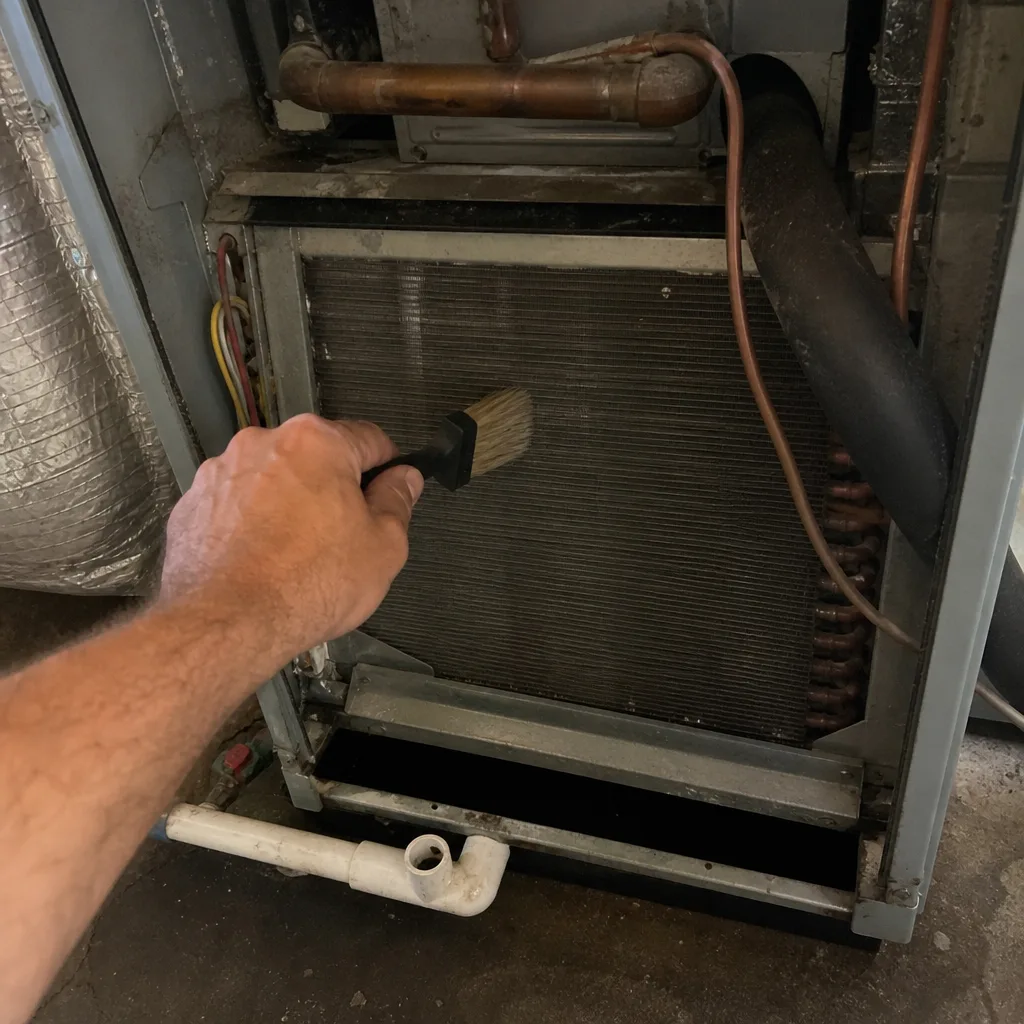
Last updated November 24, 2026
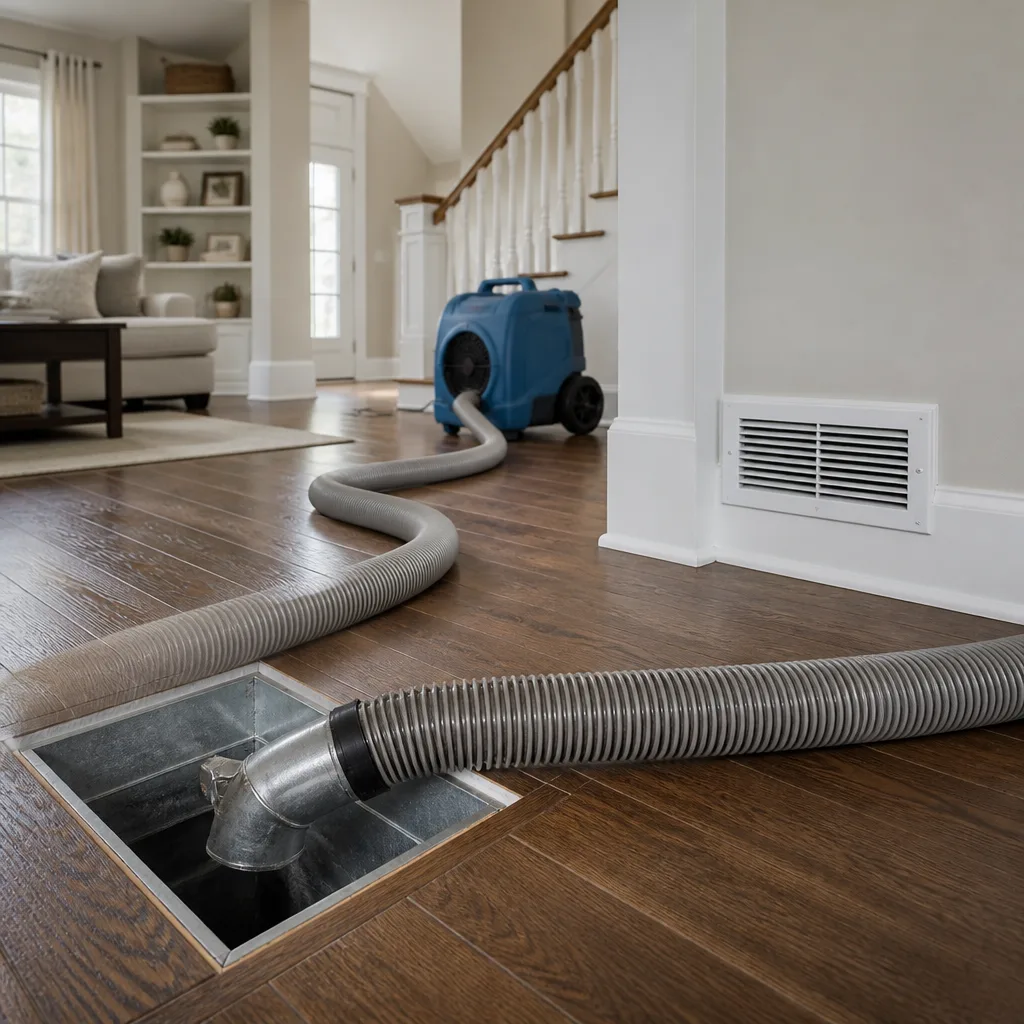 Whole-home duct cleaning
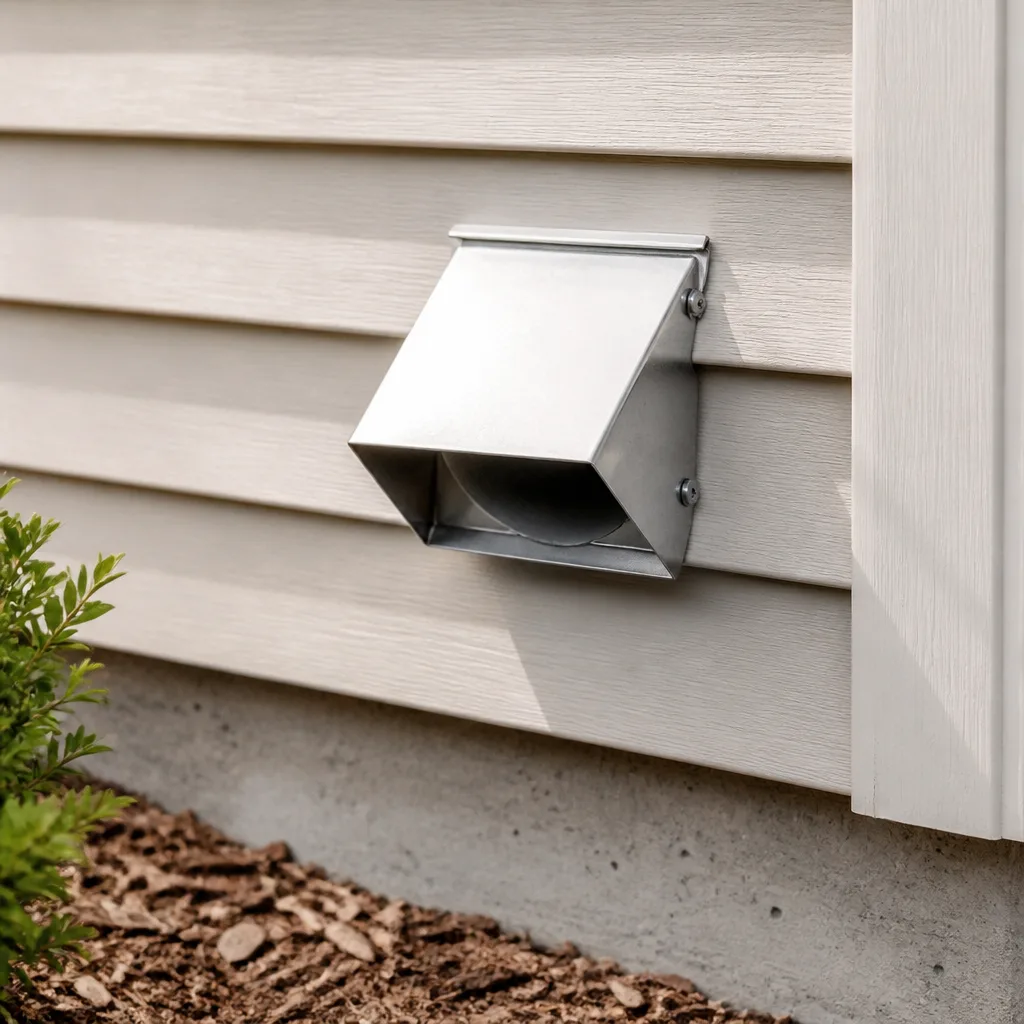 Dryer vent cleaning
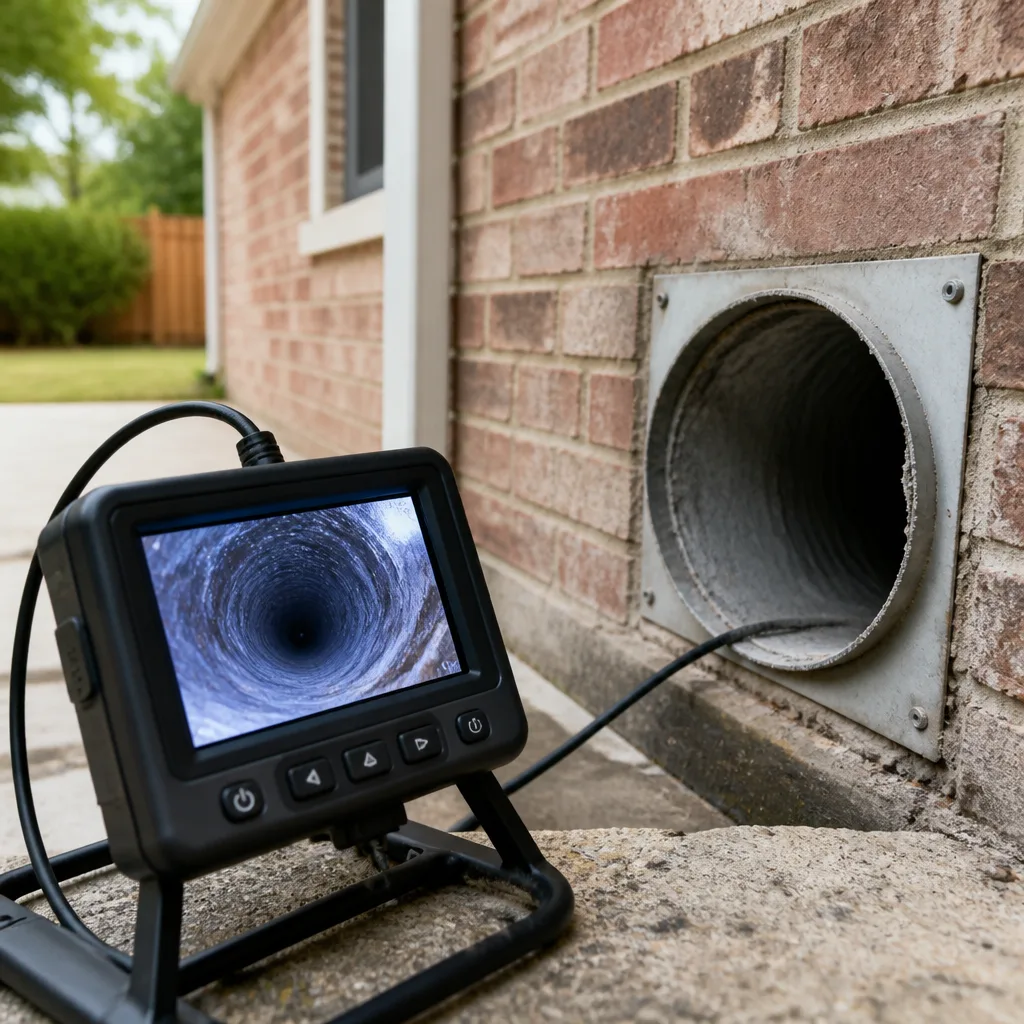 Camera inspection
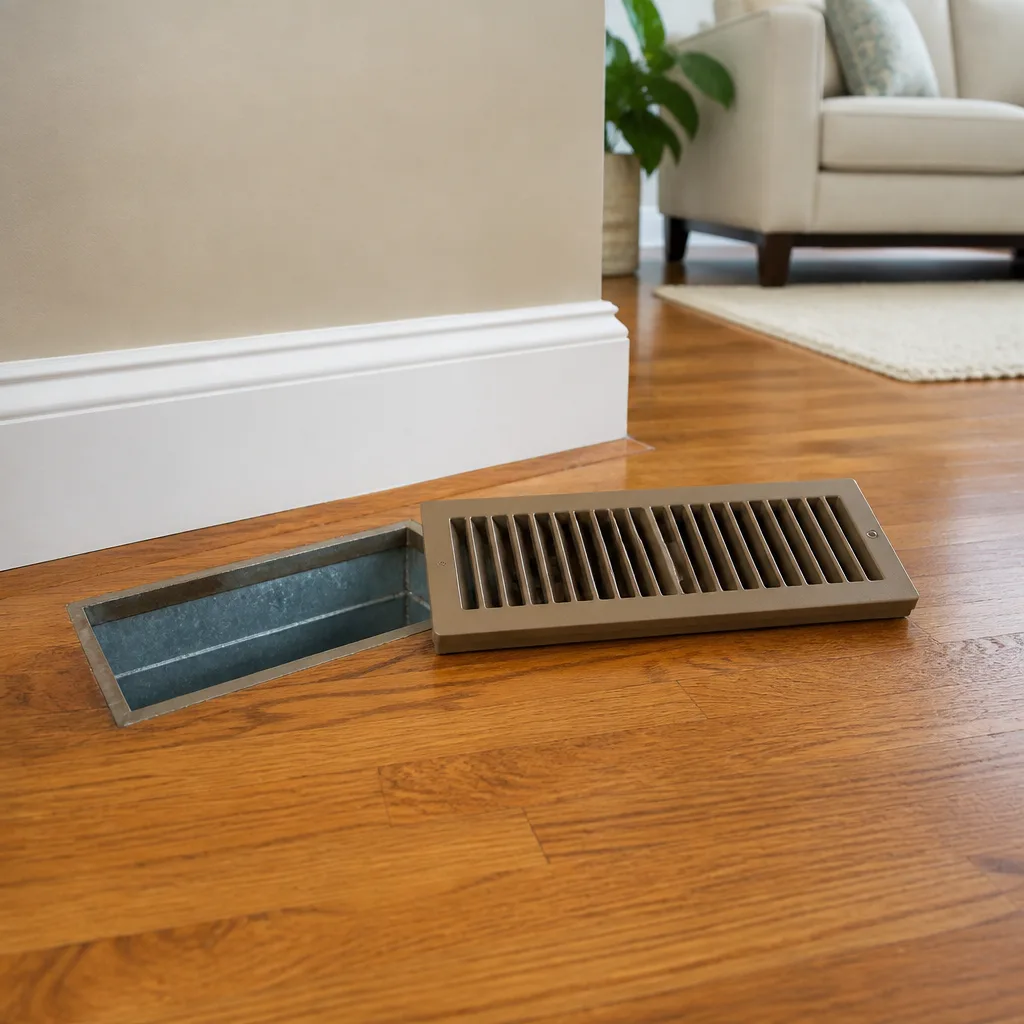 Sanitizing & deodorizing
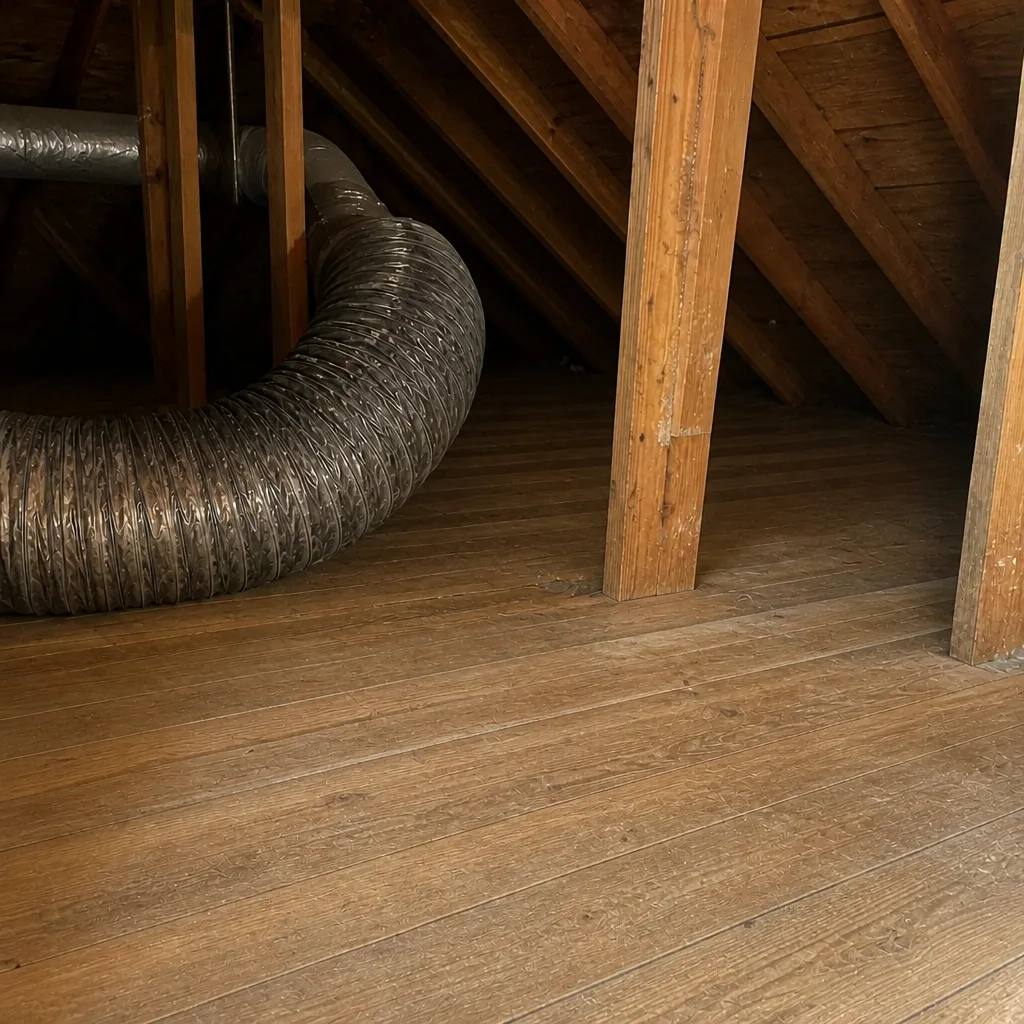
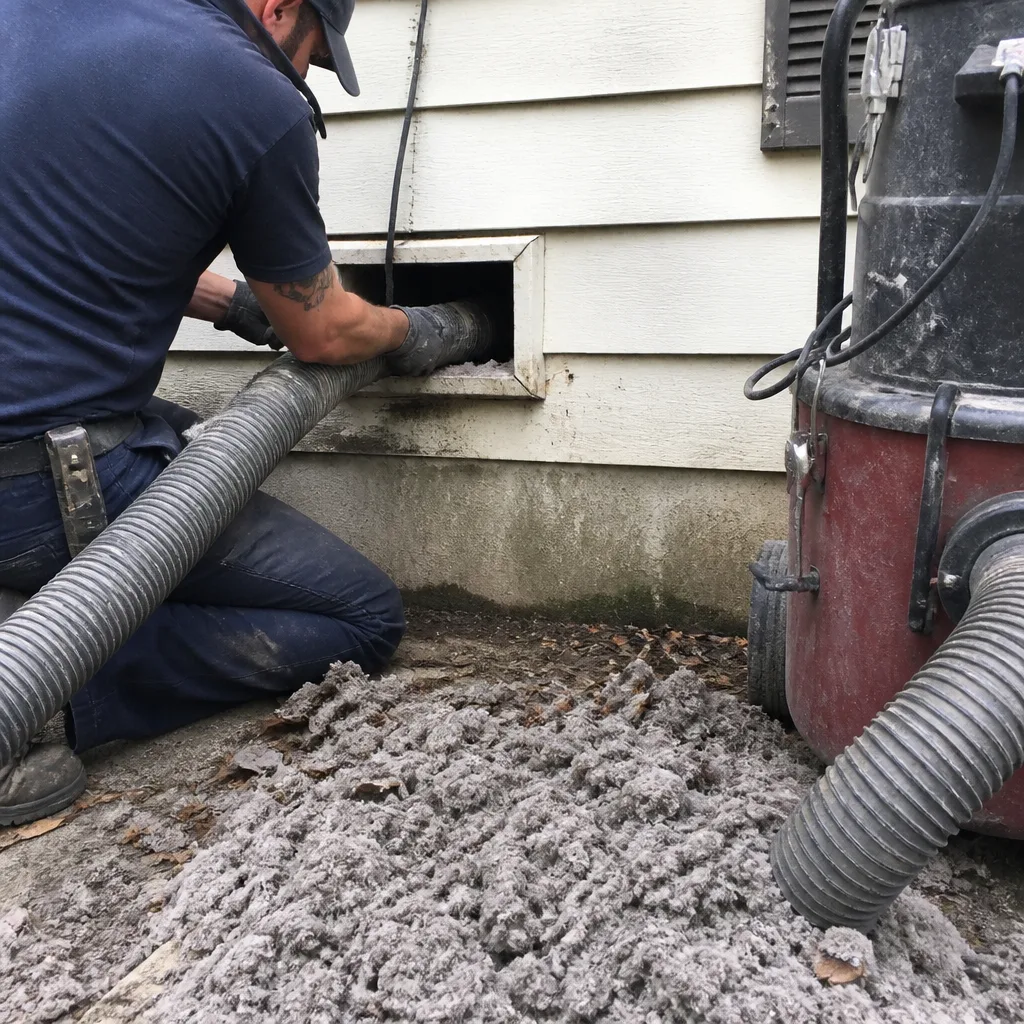
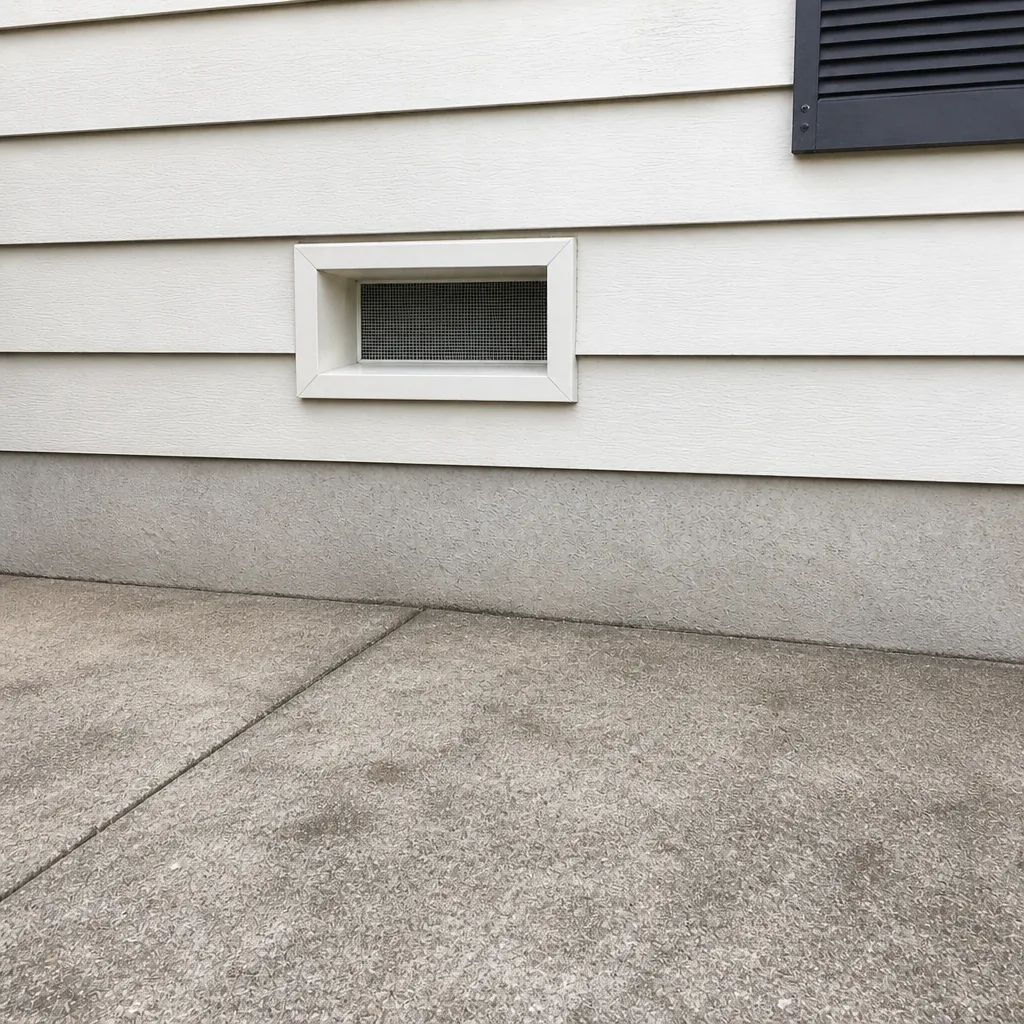
Whole-system duct and dryer vent check with before-and-after photos - you see exactly what came out of your vents
That "$99 whole-house special" is a bait ad - the real number appears once they are in your hallway, or the "clean" is a shop-vac at the register. We photograph the inside of your ducts before and after instead.
Choosing the Right Air Duct Cleaning Brand: A Buyer’s Guide for Irving Park
The most important brand names in your duct cleaning decision usually aren’t the ones on the outside of the van. They’re the equipment manufacturer and the certification body. Most homeowners in Irving Park shop this service the way they’d shop anything else online: they compare logos, star ratings and the wording of a homepage, then book whoever answers first. That approach tells you almost nothing about what will actually happen inside your ductwork. This guide changes the questions. We’ll walk through what professional equipment actually is, what a real certification requires, how to compare a local operator against a national franchise, and which questions separate a full-spectrum provider from someone running a vacuum past your vents.
Quick Answer
Choose an air duct cleaning company in Irving Park by evaluating the equipment it operates and the standards its technicians train to, not by its logo or advertising. Ask which vacuum system they use (Rotobrush and HEPA-AIRE class equipment are the professional standard), whether they hold NADCA membership, and whether they offer repair, sealing and sanitizing alongside cleaning. A provider that can answer all three in specifics is the one worth booking.
Styles & brands we work with
- Whole-home duct cleaning
- Dryer vent cleaning
- Camera inspection
- Sanitizing & deodorizing
Table of Contents
- Why “Brand” Means Equipment and Certification, Not Logo
- The Equipment Brands That Define Professional Duct Cleaning
- What NADCA Membership Actually Requires
- Comparing a Local Independent Operator to a National Franchise
- Questions That Reveal Full-Spectrum Capability
- Why Irving Park Knowledge Beats Brand Recognition
- A Step-by-Step Way to Vet a Provider
- Common Mistakes to Avoid
Why “Brand” Means Equipment and Certification, Not Logo
In this trade, “brand” refers to the systems a technician operates and the body they hold themselves to. A company’s name on a webpage is marketing. The vacuum sitting in your hallway and the certification hanging on a training record are evidence. Those two things determine whether contamination is actually removed from your system or just stirred up and left behind.
Irving Park has no shortage of duct cleaning listings, and a good number of them are individuals with a shop-vac, a drill brush and a coupon. What separates them isn’t how they describe themselves. It’s whether the equipment is capable of holding negative pressure in the system while a technician agitates the dust loose, and whether anyone has been trained to the standard that says so. The North American Duct Cleaners Association (NADCA) publishes that standard, and we’ve seen how widely “certified” gets used by people who mean nothing by it.
So here’s the shift: when we talk about choosing the right brand in this guide, we mean the equipment maker and the certification body, plus the local operator who puts them to work. The company name is the least informative part of the decision.
The Equipment Brands That Define Professional Duct Cleaning
Professional duct cleaning runs on contact vacuuming combined with negative pressure and mechanical agitation. The equipment you’ll see named in serious shops falls into a few recognizable systems. Here’s what each does and where it fits.
- Rotobrush. A rotary brush system that feeds through duct runs on a flexible shaft, agitating dust loose from the duct walls while a connected HEPA vacuum captures it. It’s especially well suited to residential trunk-and-branch systems and to the smaller-diameter flex duct common in Irving Park homes. Rotobrush equipment is what most homeowners picture when they think of professional duct cleaning, and it’s a reasonable benchmark to ask about.
- HEPA-AIRE class negative air machines. These larger portable units connect at the furnace or plenum and pull the whole system into negative pressure, so the dust you disturb has somewhere to go besides your living room. They’re the difference between “cleaning” and containment.
- Abatement Technologies. Best known for remediation-grade air handling and filtration equipment, and also for the sanitizing products used in air quality work. If a company names Abatement, ask whether they’re using them for containment or for treatment, and get specifics.
- Nikro. A manufacturer of industrial and HEPA vacuum equipment used across remediation work. Familiar in shops that take contract cleaning seriously.
What you’re listening for when you ask a provider about equipment is specificity. “We use professional equipment” is not an answer. “We run a Rotobrush with a HEPA vacuum for residential work and hold negative pressure at the plenum” is.
If you want to see how we approach this on a typical job, our air duct cleaning page walks through the process from intake to output.
What NADCA Membership Actually Requires
NADCA is the trade body that sets the assessment, cleaning and restoration standard for HVAC systems in the US. Membership is not the same as buying a certification arrow for your website. To hold it, a company agrees to a scope of work that goes beyond “vacuum the vents,” and to ongoing education. That’s the practical difference.
Here’s how to tell real membership from a self-declared label:
- Ask which standard they work to. A real NADCA member will reference the ACR (Assessment, Cleaning and Restoration) standard by name. If they can’t, they likely aren’t a member.
- Ask whether they follow the 8-point scope of work. The standard covers more than the ducts: registers, grilles, plenum, coils, drain pan, blower and the air handler itself. A company that only touches the ducts is leaving the bulk of the contamination in place.
- Ask what training their technicians hold. NADCA’s Air Systems Cleaning Specialist (ASCS) certification is the one to look for, but if a company uses their own in-house training, that’s fine too, as long as they can explain the process and standards it’s built on.
- Ask what Continuing Education they require. Membership carries an ongoing education requirement. A provider who can’t describe it probably doesn’t have it.
A provider that names the standard, the scope and the training in a normal sentence is a provider with real membership. Anyone who answers “we’re certified” and moves on is telling you the certification is a logo, not a practice.
Comparing a Local Independent Operator to a National Franchise
A national franchise can bring out-of-state process and a call center; a local independent operator can bring equipment matched to the homes they work in and a service record you can actually verify locally. Neither one wins on name recognition alone. What matters is which operator has invested in capability and can be held accountable.
Here’s the comparison we walk homeowners through when they’re choosing:
- Equipment capability. A franchise may standardize on one system nationwide and scale down to fit homes that differ from what they were built for. A local operator who works Irving Park’s mix of older bungalows and newer subdivisions can match the tool to the house.
- Technician accountability. With a franchise, the person at the door is often a contractor or a rotating crew. With an independent, you’re talking to the same operation each time, and you know exactly who is responsible if something goes wrong.
- Service breadth. Some national brands only clean ducts. An independent with full-spectrum capability can clean, repair, seal and sanitize without sending you to a second number.
- Local reputation. A franchise’s online reviews are aggregated across a region. A local operator’s reputation is what their neighbors actually experienced.
One shortcut: ask both how they handle duct repair and sealing. A pure-cleaning operation, local or national, will tell you they don’t do it. A full-service provider won’t blink.
Questions That Reveal Full-Spectrum Capability
Between cleaning and the actual state of your air, there are three things most duct cleaners never touch: the air handler and coil, the duct seams that leak, and the contamination you can’t see. A full-spectrum provider covers all three. Here’s the short list of questions that will draw that out before you book.
- “Do you clean the air handler, the coil and the drain pan, or just the ducts?” Coils and pans are where musty smell usually originates. Cleaning ducts without cleaning the coil is a partial job.
- “Can you repair and seal ductwork if you find leaks?” A company that can’t will want to tell you your ducts are fine, even when they aren’t. One that can will show you what they found and quote the repair.
- “Do you sanitize, and with what?” Sanitizing addresses microbial growth and odor. Ask which products they use. Names like Abatement Technologies and Guardsman are the kind of thing you want to hear from a provider that treats this as a health piece, not a sales pitch.
- “Do you offer dryer vent cleaning?” A company that covers the whole air pathway and vents will carry that service. It’s also a maintenance job worth knowing about, and you can read more on our dryer vent cleaning page.
- “Do you work with Honeywell or Aprilaire filtration systems?” Familiarity with the major residential air quality brands tells you they understand filtration beyond the duct surface, which is where a lot of the actual air quality work happens.
A provider who can answer “yes” to all five without checking with anyone is a full-spectrum operation. Here at Air Duct Cleaning Irving Park, we built our scope around that idea: Air Duct Cleaning Irving Park covers ducts, dryer vents, HVAC systems, repair, sealing and sanitizing, so you don’t have to hire a second company to finish the job.
Why Irving Park Knowledge Beats Brand Recognition for Outcome Quality
The same equipment operating in the same house still produces different results depending on the operator’s familiarity with the environment. Irving Park is in the Piedmont, with clay-heavy soil and a humid summer that pushes crawl space moisture up against the ductwork. Ducts that run through a damp crawl space pick up condensation and, over time, microbial growth on the interior surfaces. Clean, dry air starts with knowing where that water is coming from.
A provider who works Irving Park regularly knows the local housing stock. Bungalows and older homes often have rigid sheet metal trunk lines with a few flex branches added later. Newer subdivisions tend toward longer flex runs with tighter clearances. There’s no single cleaning routine that fits both. The right provider sees the system and knows its type before the equipment comes off the truck.
Local knowledge also covers how the outdoor air actually behaves here. Pollen season in Irving Park runs long, and nearby tree cover means a heavy spring load. Homes with central air and older duct systems can carry that particulate straight into the living space. A duct cleaning that removes settled debris but leaves the leaks and the filtration untouched doesn’t change what the people in the house are breathing.
None of that shows up in a logo. It shows up in the questions a provider asks when they walk in, and in whether the work leaves the system measurably better than they found it.
A Step-by-Step Way to Vet a Provider
Here’s the sequence we recommend when comparing duct cleaning providers in Irving Park. It takes a few phone calls, not a week.
- Confirm equipment by name. Ask which vacuum system, which agitation tool and whether they hold negative pressure at the plenum. If the answer is “a shop-vac,” the conversation is over.
- Ask about NADCA and the ACR standard. You’re listening for the standard by name and a clear answer about the scope of work. If they say “NADCA certified,” ask which certification, for whom, and what it required.
- Ask what’s included in the quote. Ducts only, or ducts plus plenum, coil, drain pan and air handler? A full quote covers the whole air pathway.
- Ask about repair and sealing. If they can’t repair, ask how they handle leaks when they find them. The answer tells you whether the job is honest.
- Ask about before-and-after documentation. Photos of your own system during the job, not stock photos. A serious provider documents.
- Ask about the products used for sanitizing. Product names like Abatement Technologies and Guardsman give you something to check against manufacturer instructions.
- Get the scope in writing. Every part of the system that will be cleaned, every part that will be sealed, every part that will be treated. That’s the quote you compare.
If a provider passes all seven, you’ve likely found a real operator. If they fail on step one or two, price won’t make up for it.
See the difference
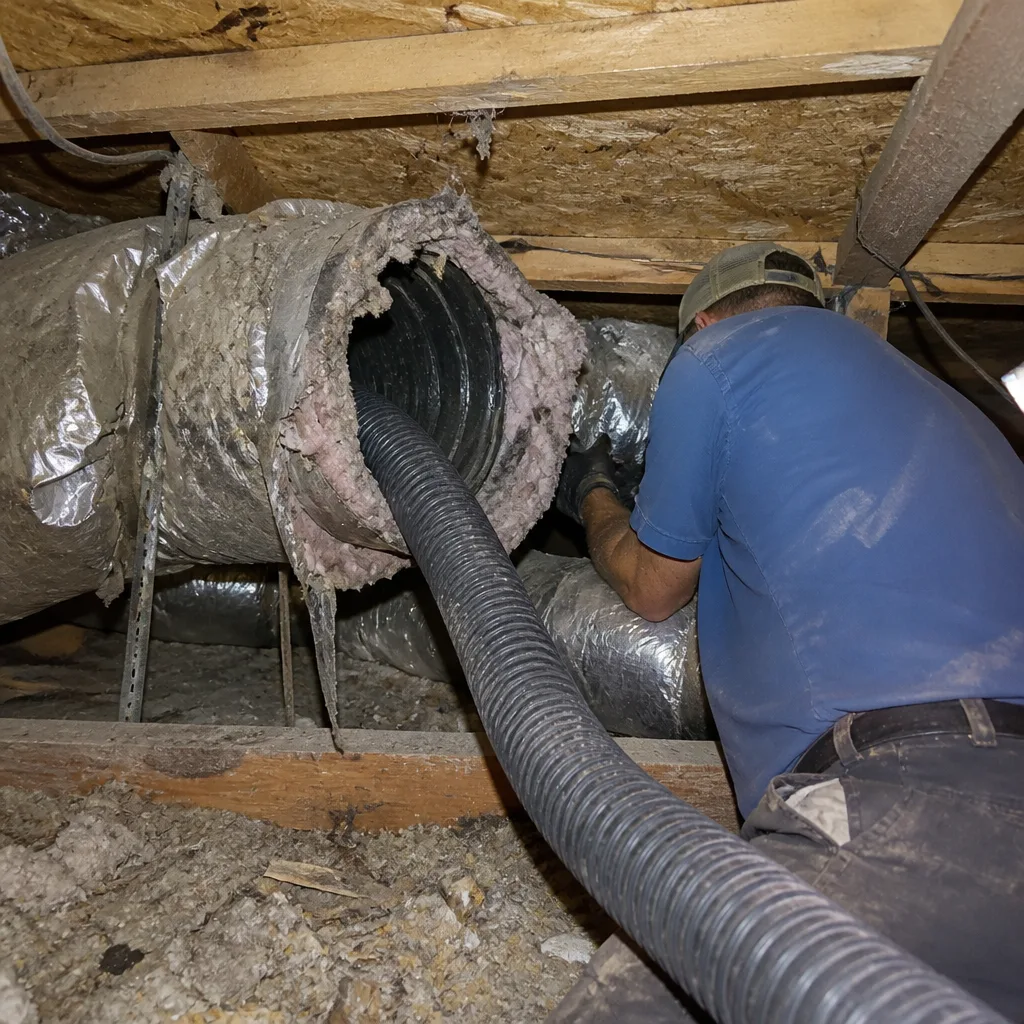 Before
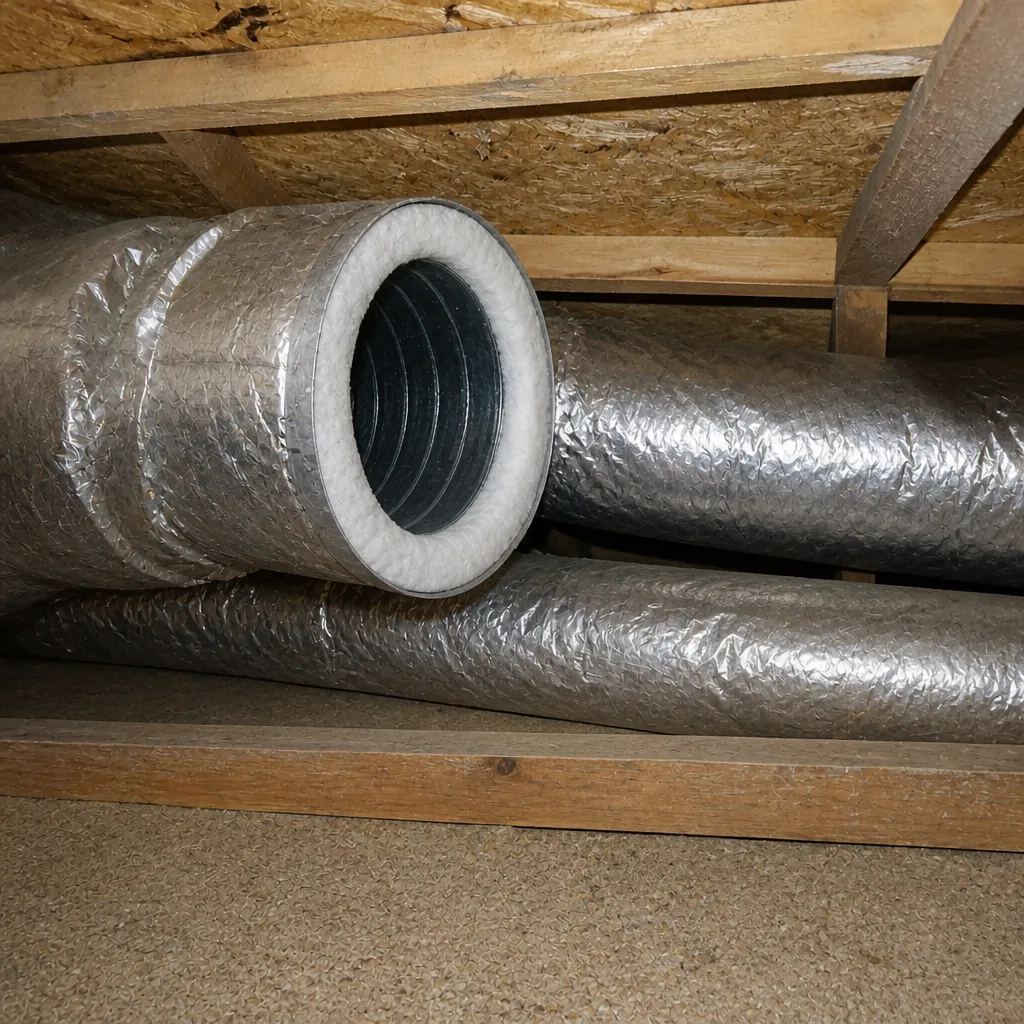 After
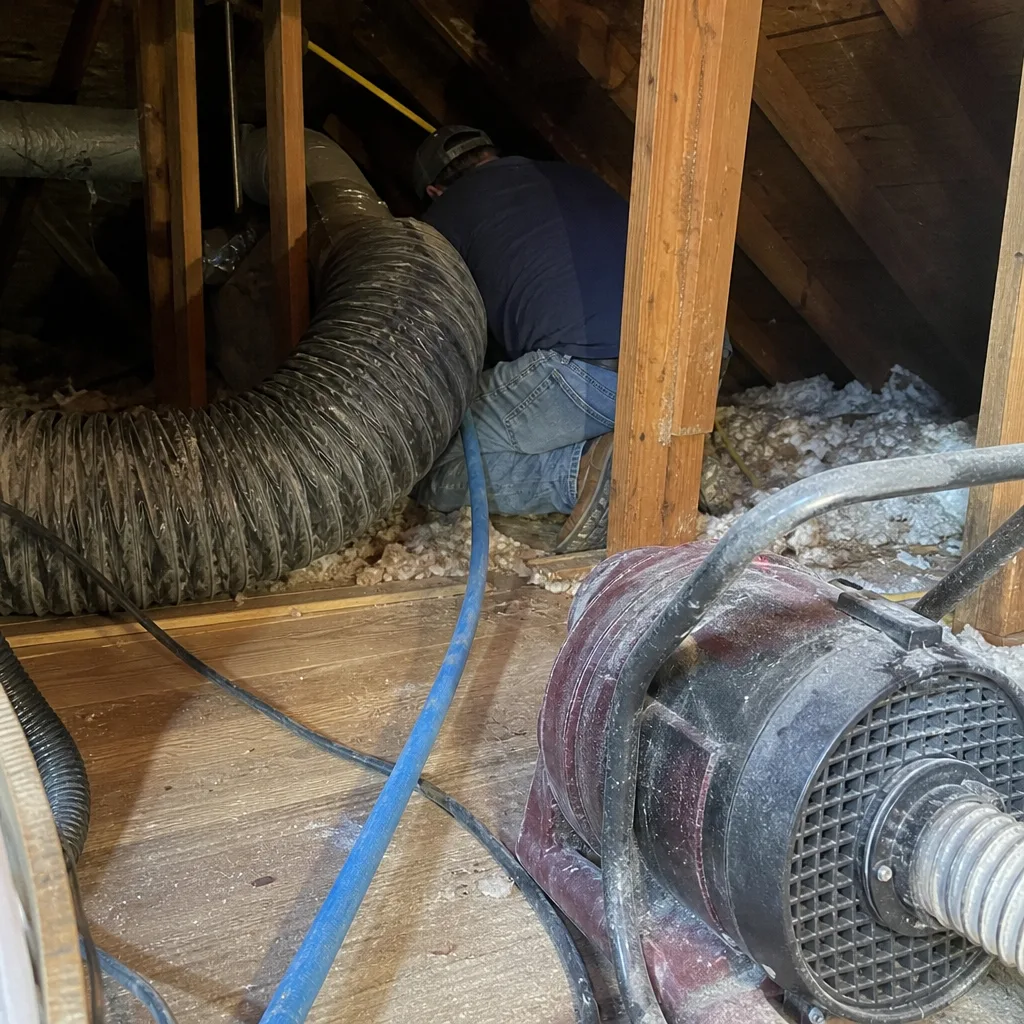 Before
 After
 Before
 After
Common Mistakes to Avoid
- Judging the company by its logo. A polished website says nothing about the equipment in the technician’s hand or whether they hold NADCA membership. Read down to the equipment list before you book.
- Accepting “we’re certified” without asking what that means. In this trade, “certified” gets used by people who bought a badge and read a manual. Ask for the standard by name.
- Choosing a pure-cleaning operation for a system with a musty odor. Odor usually comes from the coil, the drain pan or a leaky plenum. Cleaning ducts without addressing those leaves the problem where it is.
- Overlooking the crawl space in an Irving Park home. Damp conditions in the crawl space are common here and can feed moisture into flexible duct runs. A provider who doesn’t know to look there is a provider who hasn’t worked many homes here.
- Skipping the dryer vent. Most homeowners think of duct cleaning as an air quality job only. A dryer vent is a fire-safety component and belongs on the same visit.
- Comparing quotes on price alone. A $99 quote and a $600 quote for the same house usually aren’t doing the same work. Compare what’s in writing.
- Booking a national franchise when local capability is available. Nothing wrong with national brands, but the equipment and the person doing the work matter more than the name. An Irving Park operator who knows the housing stock is a real advantage.
When to Call a Professional
Duct cleaning isn’t a job for a shop-vac and a Saturday afternoon. If you’re seeing dust settle quickly on the registers, smelling a musty odor when the system cycles, noticing allergy flare-ups indoors that ease when you leave, or your energy bill climbing without a change in usage, it’s worth getting a professional assessment. Visible mold inside the plenum, water in the drain pan, or a dryer that takes longer to dry clothes are also signs to call. Our technicians have up to 9 years of experience with these systems, and we’re equipped to clean, seal and sanitize in a single visit. Air Duct Cleaning Irving Park offers free estimates in Irving Park. Call (855) 606-6578. We answer 24/7. Fast dispatch from 7am to 7pm, Sunday through Friday.
Frequently Asked Questions
You check the equipment and the standards, not the marketing. Ask which vacuum system they use (Rotobrush and HEPA-AIRE class are the professional benchmark), whether they hold NADCA membership and work to the ACR standard, and whether they cover repair, sealing and sanitizing alongside cleaning. A provider who can answer all three specifically is the one worth booking. Call (855) 606-6578 for an exact quote; estimates are free.
Yes, but only if you confirm what it means. Real NADCA membership comes with a defined scope of work and ongoing education requirements; a self-declared “certified” claim doesn’t. Ask which certification the technician holds, what the standard is called, and what training the team goes through. If the answer is vague, move on.
A local operator is often the better fit if they have the equipment and standards. Irving Park’s mix of older bungalows and newer flex-duct homes calls for an operator who knows the housing stock, and local accountability means the same company is on the hook if something goes wrong. Choose on capability, not on franchise name.
A rotary agitation tool such as a Rotobrush, a HEPA-rated vacuum, and a negative air machine connected at the plenum. The combination matters: agitation lifts the debris, the vacuum captures it, and negative pressure keeps it out of your living space. Anything less than that trio isn’t a professional job.
Cheap quotes usually leave out the parts of the job that cost time: the plenum, the coil, the drain pan, the air handler, the sealing. You may also be paying for equipment the company doesn’t actually own. Compare written scopes side by side, not prices. Call (855) 606-6578 for a written estimate that lists what’s covered.
Most homes do well with duct cleaning every few years, and sooner if you’ve had renovation dust, a rodent issue, water intrusion or a musty odor. Irving Park’s humid summers and long pollen season can load the system faster than a dry climate. If the home is new to you and its duct history is unknown, an assessment first is a sound call.
Yes. Duct repair and sealing is part of what we do, which is not true of most duct cleaning operations. A provider who can’t repair is a provider with a reason to tell you everything looks fine. We seal what we clean, so leaks get addressed in the same visit as the cleaning and the air quality treatment.
The Bottom Line
The right brand in duct cleaning is the equipment and the standard, not the logo on the van. Ask what they run, ask what they’re trained to, and ask what they cover beyond the vents. A provider who can answer in specifics, who holds real NADCA membership, and who can clean, repair, seal and sanitize in one visit is the one whose name belongs in your contacts. In Irving Park, our team is set up for exactly that kind of job, and we’d rather show you the work than describe the brand. Call (855) 606-6578 for a free estimate. We answer 24/7. Fast dispatch from 7am to 7pm, Sunday through Friday. You can also ask about HVAC cleaning for the whole system.
Written by the team at Air Duct Cleaning Irving Park.